
Water Purification · Singapore
Water Filters in Singapore: Every Type Compared (2026)
Compare pitcher, faucet, countertop, under-sink and whole-home filters by treatment method, installation, upkeep and Singapore pricing.
Written by
Velta Singapore Editorial Team
Updated
Reading time
About 6 minutes
How we research
Editorial policy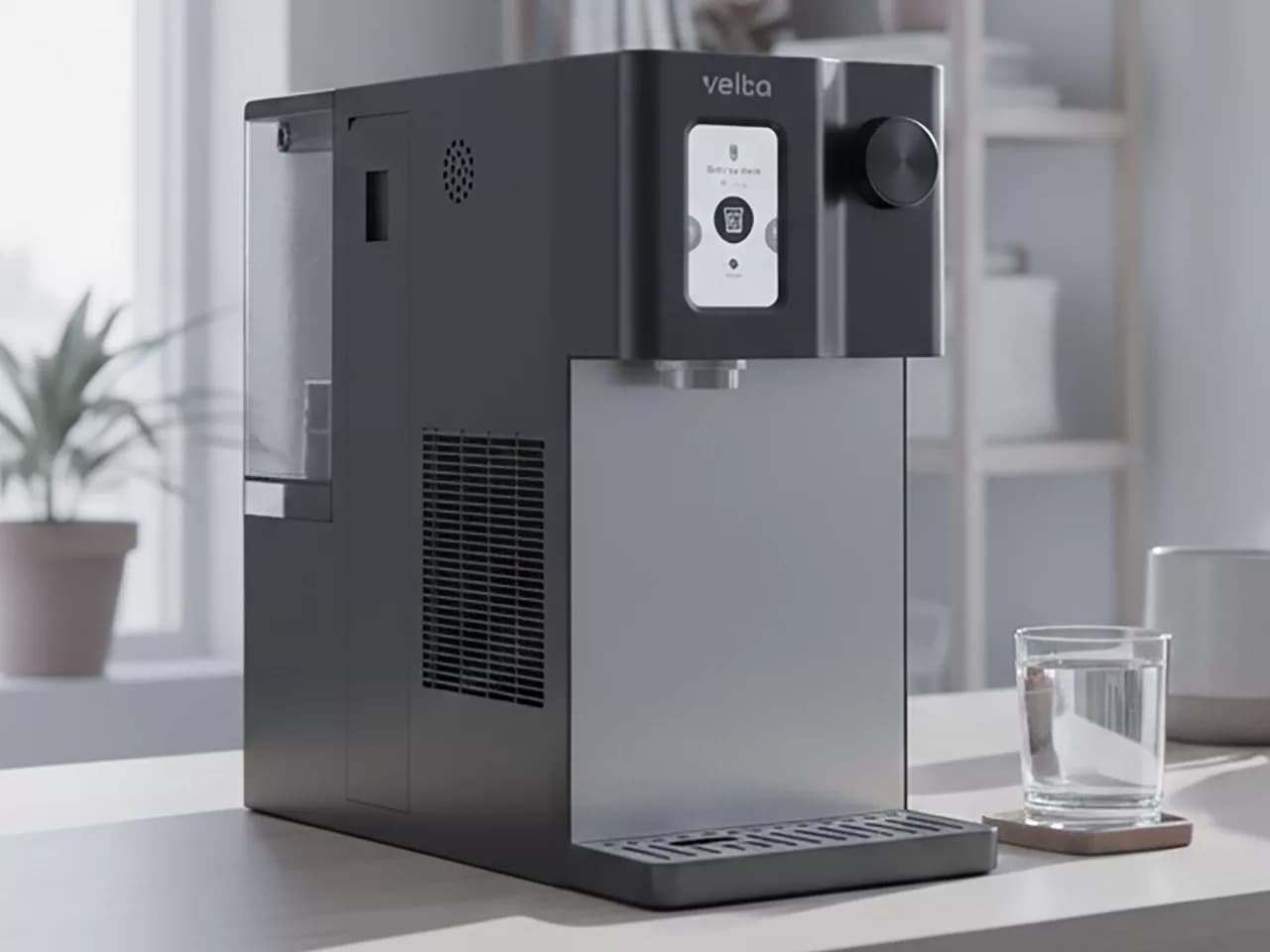
Water filters sold in Singapore range from faucet attachments to complete reverse-osmosis systems. Compare the treatment stages, the evidence for the exact model, installation and the total cost over time.
This guide sorts the market into five filter types, explains what each one removes and shows where each format fits—including homes that do not need one at all.
Do You Even Need a Water Filter in Singapore?
Singapore tap water is safe to drink straight from the tap. PUB runs over 500,000 tests a year, and the water consistently meets WHO drinking-water guidelines. A full breakdown of Singapore tap water quality covers the details.
People usually buy a filter for one of three reasons:
- Taste. PUB uses chlorine to keep water safe through the distribution network. It works, and it's harmless at these levels — but you can taste it, especially in the mornings.
- The last 50 metres. Water leaves the treatment plant clean, but it still travels through your building's pipes and storage tanks. In older blocks, that final stretch can add sediment, rust particles, or metallic taste that PUB's plant-level testing never sees.
- Something specific in your water. Choose a filter only once a test has found the substance you want reduced and the exact model has a result for it.
If none of those apply, save your money. If one does, the question is which type gives you that benefit for the least money and hassle.
The Five Types of Water Filter
1. Pitcher / Jug Filters (~$30–$80)
The Brita-style jug with a carbon cartridge. You fill it, gravity pulls water through the filter, you pour.
What it removes: chlorine taste and odour, some sediment. That's about it — the water passes through the carbon too briefly for deep filtration.
What it doesn't: heavy metals in any meaningful quantity, microplastics, bacteria, dissolved solids.
Best suited to: households mainly bothered by chlorine taste who do not drink a lot of filtered water. The recurring cartridge cost (~$10/month for a heavy-use household) adds up over time, and the jug takes up fridge space.
2. Faucet-Mount Filters (~$30–$100)
A small unit that screws onto your tap with a switch between filtered and unfiltered water.
What it removes: chlorine, sediment, some larger contaminants — similar chemistry to a jug filter, but with mains pressure pushing water through.
What it doesn't: dissolved metals, fine particles, anything requiring serious contact time or a fine membrane.
Best suited to: households wanting a cheap fix for chlorine taste and sediment. Cartridge quality varies between brands, and compatibility depends on the tap's spout thread.
3. Countertop Filters (~$200–$1,500)
A standalone unit that sits beside your sink. The range here is huge — from simple multi-stage carbon systems to full countertop reverse osmosis machines with their own water tanks.
What it removes: depends entirely on what's inside. Carbon-only countertop units are a jug filter with better ergonomics. Countertop RO units are a different category: their membranes reduce dissolved solids and, depending on the model's test claims, substances such as certain metals and microplastics. Our guide to how reverse osmosis works explains the mechanism.
Compare: whether the system uses carbon or RO and, for RO units, the recovery ratio—the amount of water rejected per litre purified. Older drain-connected designs can reject 3–4 litres per clean litre; recirculating countertop designs waste far less, though take any rated figure together with the test conditions behind it (see how recirculating tanks work).
Best suited to: renters and homes where plumbing cannot be modified. Countertop models need no permanent installation, but they take up counter space.
4. Under-Sink Filters (~$400–$3,500)
Installed in the cabinet under your sink, plumbed into the cold water line, dispensing through a dedicated tap or your existing one.
What it removes: again, depends on what is inside. Carbon-block systems handle taste and sediment; under-sink RO systems also reduce dissolved solids and whatever else the model is tested for.
What to check: tank vs tankless (tankless saves cabinet space and avoids stored-water staleness), annual filter replacement cost (this is where cheap systems get expensive), and whether installation is included. Velta's HydroView+ is a tankless under-sink RO system. (If you would rather stay on the counter, HydroSpark+ adds sparkling water on top of RO.)
Best suited to: owner-occupied homes where an under-sink installation is practical. Installation can be included in a kitchen renovation or arranged as separate plumbing work.
5. Whole-House Filters (~$1,500–$8,000+)
A filter array installed at your water inlet, treating every tap in the home — showers, washing machine, everything.
Best suited to: homes with a known problem affecting several taps. Whole-house filtration is usually unnecessary for Singapore homes because the public supply is treated and much household water is used for flushing and washing. Landed properties with old internal plumbing may be an exception when sediment affects every outlet.
Quick Comparison
Scroll to see the full table
| Type | Price | Removes chlorine taste | Can reduce metals & microplastics | Installation |
|---|---|---|---|---|
| Pitcher / jug | $30–$80 | Yes | No | None |
| Faucet-mount | $30–$100 | Yes | No | DIY, 5 min |
| Countertop (carbon) | $200–$500 | Yes | Limited | None |
| Countertop (RO) | $500–$1,500 | Yes | Often; check the model's claims | None |
| Under-sink (RO) | $400–$3,500 | Yes | Often; check the model's claims | Plumber |
| Whole-house | $1,500+ | Yes | Varies by system | Major |
Treat the metals-and-microplastics column as a rough guide, not a spec. What a specific unit reduces, and by how much, depends on its filter stages and test claims, so check those before you buy.
The Decision in Three Questions
Chlorine taste and odour. A good activated-carbon filter takes care of this without the cost of an RO system. Compare the exact cartridge claim and replacement cost.
RO without permanent plumbing changes. A refill-tank countertop RO system may suit a rental or a home where plumbing cannot be modified. Compare its footprint, recovery ratio, filter cost, and how you fill it and empty the waste tank.
"I'm doing my kitchen anyway / I own this place / I want it invisible." Under-sink RO, tankless if the budget allows. Decide once, forget about it for years apart from filter changes.
If you also want hot and cold water, compare water dispensers and water purifiers separately.
Filter Maintenance
A filter only works as well as you keep up with its replacements. A carbon cartridge past its lifespan can stop working, shed what it has collected back into the water, and start growing bacteria. Two things follow:
- Budget the running cost before you buy. A $60 jug with $120/year in cartridges costs more over three years than some countertop systems.
- Set a reminder. A filter can lose effectiveness long before the flow slows. A built-in filter-life indicator takes the guesswork out.
Choosing a Filter Type
Singapore's tap water is safe, so a water filter here is a quality upgrade rather than a safety necessity. Buy the simplest type that solves your actual problem: about $50 for chlorine taste, or RO if you want broader purification, on the counter or under the sink.
Our Singapore water-purifier guide covers where to put it, refill-tank and plumbed-in systems, filter schedules and running costs.
Next step
Compare the products for your home.
Velta Singapore sells some of the products discussed in this article. Compare what they do, how they install and what they cost to run against the other products in the guide.
Velta prices are live from our Singapore store. Competitor prices, promotions and availability can change. Filters and any installation work add to the total cost over time.