
Water Purification · Singapore
How to Choose a Water Filter or Purifier for Your Singapore Home
Which water filter or purifier actually suits an HDB, BTO or condo kitchen: the treatment you need, countertop or under-sink, filter costs and a six-question shortlist.
Written by
Velta Singapore Editorial Team
Updated
Reading time
About 7 minutes
How we research
Editorial policy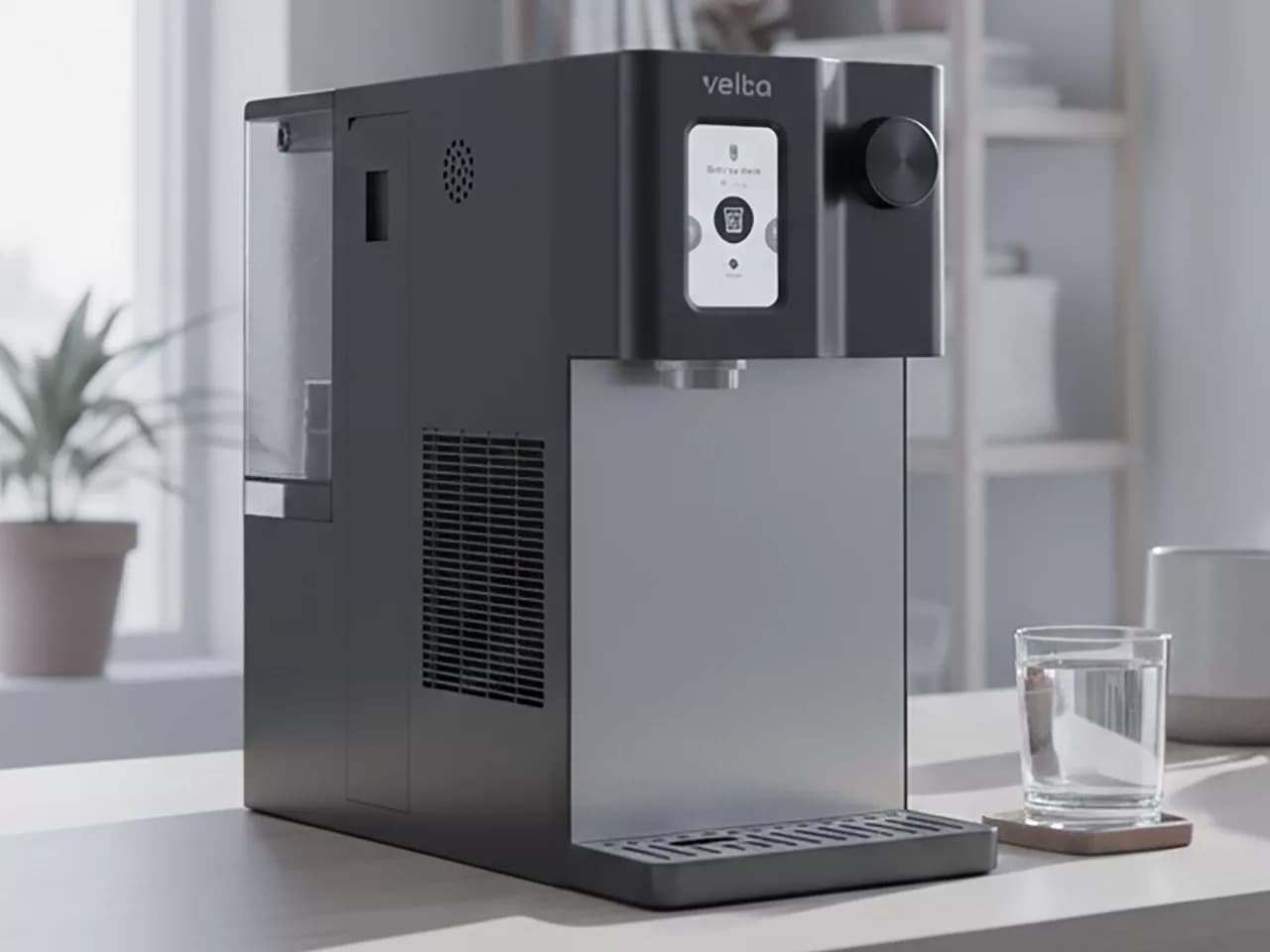
There is no single “best” water purifier for every Singapore home. A good choice solves a clearly named problem, fits the kitchen and has replacement filters you can get at a price you are happy with.
Start here:
Scroll to see the full table
| Your main reason for buying | Sensible starting point |
|---|---|
| You dislike the chlorine-related taste | Carbon filtration with evidence for chloramine reduction |
| You specifically want low-TDS water | Reverse osmosis (RO) |
| A test found a substance of concern | A model certified to reduce that exact substance |
| You mainly want instant hot or cold water | Compare the hot and cold features first, then check what filtration is included |
| You want more counter space | Under-sink filtration with its own faucet |
| You want sparkling water too | A purifier with built-in carbonation, or a separate purifier and carbonator |
If you cannot identify a need in that table, pause before buying. PUB states that Singapore tap water is suitable for drinking directly without further filtration. A purifier here is a choice, not a safety requirement.
Start With the Job, Not the Technology
“Cleaner water” is too vague to compare. Write down the result you actually want: a different taste, low-TDS RO water, a certified reduction, instant temperatures, sparkling water or a less cluttered kitchen.
That distinction matters because treatment and convenience are separate decisions. A basic carbon filter can fix taste without heating or chilling. A premium dispenser may give you five temperatures but use a treatment method you did not need. A hydrogen water machine adds dissolved H2 to purified water; it does not purify it.
For an unexplained problem such as persistent discolouration, unusual odour or a sudden taste change, investigate the source before shopping. PUB advises customers to run the tap until the water clears and contact PUB if the issue persists; a problem inside the building may need building management or a plumber instead. A purifier can change the water at one outlet, but it does not repair upstream plumbing.
The Main Treatment Options
Scroll to see the full table
| Treatment | What it is commonly used for | What to check |
|---|---|---|
| Activated carbon | Chlorine-related taste and odour | Whether the exact cartridge is tested for chloramine and any other claimed reductions |
| Reverse osmosis | Lowering total dissolved solids; other named reductions when supported | Test evidence for the complete system, water efficiency, where the reject water goes and how often the membrane is replaced |
| Ultrafiltration | Retaining particles according to membrane rating | Rated pore size, flow conditions and model-specific microbial or particle claims |
| UV | Inactivating susceptible microorganisms under stated conditions | Rated dose and flow, lamp status, pre-filtering and replacement requirements |
Activated Carbon
Carbon is the straightforward starting point when taste is the concern. Not every carbon cartridge reduces chloramine equally, and a “carbon filter” label on its own tells you nothing about metals, microorganisms or dissolved solids. If you are weighing a simple pitcher or faucet filter against a full system, our comparison of every water filter type sold in Singapore sets them side by side.
Reverse Osmosis
RO uses pressure to pass part of the incoming water through a semi-permeable membrane. It reduces TDS, and a certified system will list the specific substances it has been tested to reduce. It also produces reject water and usually includes carbon pre- or post-filtration.
Choose RO because you want low-TDS water or a specific, tested reduction, not because a salesperson implied Singapore tap water is unsafe. The Velta RO purifier explainer shows how the same filtration foundation can be used in countertop and under-sink formats.
UV and Ultrafiltration
These are useful technologies in the right system, but neither is a universal upgrade. UV does not remove particles or dissolved material. UF does not normally reduce most dissolved matter. For a normal PUB supply, ask what problem the extra stage actually solves and what evidence supports it.
Choose the Appliance Format
Two appliances can treat water identically and still be completely different to live with.
Scroll to see the full table
| Format | Works well when | Check before buying |
|---|---|---|
| Refill-tank countertop | You want to avoid a permanent water connection | Tank capacity, filling frequency, cleaning access, counter footprint and power |
| Plumbed-in countertop | You want no refilling, plus hot and cold water | Inlet, drain, shut-off valve, power and clearance for tanks or lids |
| Under-sink | You want the counter clear | Cabinet space, faucet position, water connection, drainage and filter access |
| Whole-house | A landed property has a defined whole-home treatment need | Flow, pressure, backwashing or drainage, installation access and maintenance |
“Countertop” does not mean “no plumbing”: some models use a refill tank, some connect to the tap through a diverter and others need permanent water and drain connections. Check which one the exact model uses.
For an HDB kitchen, measure width, depth, height and the room needed to reach filters and connections. For a condo, check MCST requirements before modifying plumbing. Where a building uses storage tanks, the MCST or building owner is responsible for their maintenance and annual certification; if you notice a problem, ask them rather than assuming the tank is unsafe. Landed homes have more installation flexibility, but it is still worth testing the water before choosing whole-house treatment.
Treat Extra Water Modes as Separate Choices
Hot, chilled, sparkling, alkaline and hydrogen water are not filtration grades.
- Hot and chilled water on tap can replace the kettle and the fridge bottle. Compare useful temperature presets, serving volume, recovery time and child lock.
- Sparkling water requires CO2 carbonation. If you already own a purifier, a standalone soda maker will usually cost much less than replacing it with a combined appliance.
- Alkaline water is defined by higher pH. That does not show what has been filtered or establish a health benefit.
- Hydrogen water is defined by dissolved molecular hydrogen. A direct H2 measurement is more useful than pH or ORP, and adding hydrogen is not the same as purifying.
Treating them separately stops a long feature list from making the decision for you.
Read the Evidence Properly
A standard number or certification logo is only a starting point. Look for the exact brand and model in the certifier's live database, then read the scope of the listing.
For example, NSF/ANSI 42 covers aesthetic effects such as taste and odour; NSF/ANSI 53 covers specified health-effect reduction claims; and NSF/ANSI 58 applies to reverse-osmosis systems, including TDS reduction plus any optional claims shown for that model. NSF explains the scope of NSF/ANSI 58.
Do not turn a membrane pore-size illustration, a TDS display or a generic laboratory report into a broader safety claim. The report should identify the product tested, the method, the result and the party issuing it.
Calculate the Ownership Cost
Compare at least the same three-year period for every shortlisted appliance:
- Purchase price or the complete subscription commitment
- Installation and removal charges
- Every filter or membrane replacement due in that period
- CO2 cylinders or other consumables
- Scheduled servicing and call-out charges
- Warranty length, exclusions and who handles service locally
Go by the replacement schedule and capacity for the exact cartridge. Generic internet tables are unreliable because source water, daily volume, appliance reminders and cartridge design differ. Before you commit to an imported model, check you can buy its replacement filters in Singapore.
A Six-Question Shortlist
Before paying, ask:
- What exact result am I buying this appliance for?
- Which part of the product documentation supports that result?
- Will it physically fit with room to fill, clean and service it?
- What plumbing, drainage and electrical work does it need?
- What will I spend over three years, not just today?
- Who supplies filters and handles warranty service in Singapore?
If the salesperson cannot answer those questions plainly, the product is not ready for your shortlist.
Velta's water purifier range uses RO across three different formats: HydroSpark+ combines tank or pipe-in operation with hot, chilled, ambient and sparkling water; HydroForm+ is a plumbed-in countertop purifier with hot, cold and ambient water; HydroView+ sits under the sink and pours ambient water from its own faucet. Compare the format only after deciding that RO suits the result you want.
For the narrower terminology question, see water purifier vs water dispenser. For carbonation-first shopping, compare the sparkling water makers available in Singapore.
Next step
Compare the products for your home.
Velta Singapore sells some of the products discussed in this article. Compare what they do, how they install and what they cost to run against the other products in the guide.
Velta prices are live from our Singapore store. Competitor prices, promotions and availability can change. Filters and any installation work add to the total cost over time.