
Water Purification · Singapore
What Is Reverse Osmosis? How RO Water Filters Work
A practical explanation of reverse osmosis membranes, certified contaminant claims, wastewater, maintenance, minerals, and whether RO is useful in Singapore.
Written by
Velta Singapore Editorial Team
Updated
Reading time
About 6 minutes
How we research
Editorial policy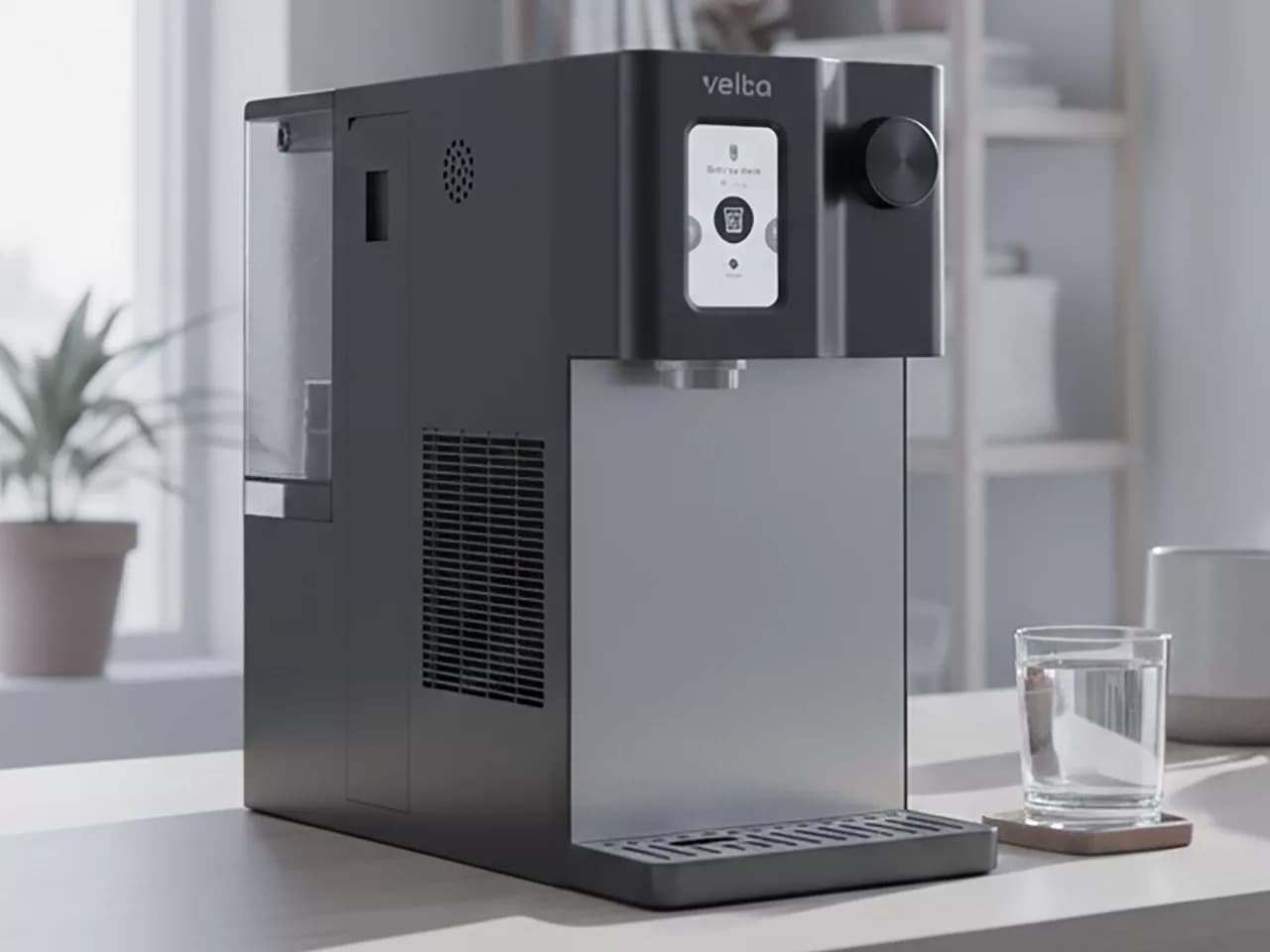
Reverse osmosis (RO) is a filtration process that uses pressure to push water through a semi-permeable membrane. It produces two streams: treated water that passes through the membrane and reject water carrying the more concentrated dissolved material left behind.
RO can reduce total dissolved solids and, when a specific system is tested for them, substances such as lead, fluoride, nitrate, arsenic, or PFAS. It also uses more water than carbon filtration and needs scheduled cartridge and membrane replacement. Choose an RO system by matching its tested performance, efficiency and upkeep to what you actually want.
How Reverse Osmosis Works
Ordinary osmosis moves water across a membrane toward the side with a higher concentration of dissolved material. Reverse osmosis applies pressure in the opposite direction. Water molecules pass through the membrane while much of the dissolved material remains in the concentrate stream.
The membrane does not work alone. A common home system includes:
Scroll to see the full table
| Stage | Typical role |
|---|---|
| Sediment pre-filter | Captures particles that could clog later stages |
| Carbon pre-filter | Reduces chlorine or chloramine that could affect taste or membrane life |
| RO membrane | Reduces dissolved solids (and whatever else the model is tested for) |
| Post-carbon filter | Adjusts taste after the membrane |
| Optional remineralisation | Adds some minerals back for taste |
| Optional UV | Kills microbes with UV light (tested separately from the RO stage) |
The number of stages is not a quality score. A well-tested three-stage system may be more credible than a “seven-stage” product with no accessible performance report.
What Does an RO Filter Remove?
There is no universal reduction percentage for all RO products. Performance changes with the membrane, pressure, temperature, incoming concentration, recovery rate, maintenance, and the substance being measured.
NSF/ANSI 58 requires TDS-reduction testing and can include optional claims for substances such as lead, nitrate/nitrite, arsenic, fluoride, copper, chromium, VOCs, and others. A certification only supports the claims in the exact model's listing.
When comparing systems:
- Find the exact brand and model in the certifier's live database.
- Check the individual reduction claims, not just the standard logo.
- Confirm the rated daily production, efficiency, and recovery.
- Read the conditions and replacement capacity attached to the claim.
- Ask for a current test report if the seller makes an additional claim.
RO is commonly paired with carbon because the technologies do different jobs. The RO membrane handles dissolved material; carbon handles chlorine, taste and odour compounds and other things it is good at adsorbing. Neither removes “everything.”
Does Singapore Tap Water Need RO?
PUB states that Singapore tap water is suitable for drinking directly from the tap without further filtration. PUB reports more than 500,000 tests each year across physical, organic, inorganic, radiological, and microbiological parameters, with monitoring from source through distribution.
That means RO is optional for Singapore households. Reasons someone may still choose it include:
- A preference for low-TDS water or its taste.
- Another appliance in the home, such as a hydrogen water machine, that needs low-TDS water to work.
- A specific substance a lab test has found in your water that the system is certified to reduce.
- Wanting RO water together with hot, chilled, or sparkling water from one appliance.
Singapore tap water is already safe to drink, so fear is not a sound reason to buy RO. Persistently discoloured or unusual water points to an issue for building management or PUB to investigate; a purifier would only conceal the cause.
The Wastewater Trade-off
RO creates reject water as part of the process. The amount varies widely by design and operating conditions. The US EPA says a typical point-of-use RO system can reject five gallons or more for every gallon treated, while WaterSense-labelled systems must reject no more than 2.3 gallons per gallon treated and meet independent performance criteria.
Three figures make product comparisons clearer:
- Efficiency rating: the percentage of incoming water that becomes treated water.
- Recovery rating: a related figure for how much incoming water becomes treated water, measured under the manufacturer's stated test conditions.
- Waste-to-treated ratio: litres rejected for each litre available to drink.
Any rated figure only means something together with its test conditions. Tank sizes alone do not prove a ratio: a 5-litre source tank and a 1-litre waste tank do not guarantee 4:1 on every cycle.
Countertop systems may collect concentrate in a removable tank, while installed systems often send it to a drain. Some designs recirculate source water. So each format handles waste water, and cleaning, differently.
Minerals and Taste
RO reduces dissolved minerals along with other dissolved material. Whether you like the result is mostly a matter of taste and use case. Some systems add a remineralisation cartridge after the membrane; others dispense low-TDS water directly.
A remineralisation or “alkaline” stage does not by itself establish a medical benefit. What matters is what it adds, how that is measured, and how often the cartridge needs changing. For nutrition or medical questions, ask a professional; a TDS reading will not answer them.
Maintenance Matters
An RO system's performance depends on maintenance, and the exact model's schedule is more relevant than a generic internet estimate. Service can include:
- Replacing sediment and carbon cartridges.
- Replacing the RO membrane at its rated life, or sooner if the system's own readings show it slipping.
- Sanitising tanks, tubing, faucets, and other wetted parts as directed.
- Checking for leaks and drain restrictions.
- Checking output the way the manufacturer specifies.
A TDS display is useful for tracking a change in dissolved solids, but it does not identify individual contaminants or prove microbiological safety.
RO vs Carbon Filtration
Scroll to see the full table
| Question | Carbon filtration | Reverse osmosis |
|---|---|---|
| Primary use | Taste and odour, plus whatever the cartridge is tested for | Dissolved solids, plus whatever the system is tested for |
| Reject water | Usually none | Yes |
| Electricity | Often none | Some systems use a pump |
| Mineral reduction | Usually limited | Substantial by design |
| Maintenance | Cartridge replacement | Pre/post-filters, membrane, and system cleaning |
For many Singapore homes focused on taste, a suitably tested carbon filter may be enough. RO is the more involved choice, worth it when you want low-TDS water or need a specific, certified reduction.
Frequently Asked Questions
Is RO water safe to drink? It can be. A properly certified, correctly installed and maintained system is designed to produce drinking water. What makes it safe is the source water, the specific product, the installation and the upkeep, not the letters “RO” alone.
Does RO remove PFAS, lead, or fluoride? Some systems carry certified claims for these substances. The exact model listing under NSF/ANSI 58 or another recognised certification shows which claims apply; membrane performance is not universal.
Is RO necessary in Singapore? It can be if your only concern is general tap-water safety, because PUB says no further filtration is needed. It still makes sense if you prefer low-TDS water or a lab test has shown something specific you want reduced.
How often should an RO membrane be replaced? Follow the manufacturer's schedule and the system's own indicators for your exact model. Incoming water, pre-filter maintenance, daily volume, and operating pressure all affect service life.
Is a lower TDS reading always better? No. TDS measures the amount of dissolved material, not whether each substance is harmful. It is useful for monitoring RO performance but is not a complete water-quality test.
Next, compare the certificates, efficiency, running cost and installation needs of the systems on your shortlist. Our Singapore water-purifier guide walks through the wider decision, and the Velta water-purifier range shows what is available here. For how the Velta range applies RO in practice, read the reverse osmosis explainer.
Next step
Compare the products for your home.
Velta Singapore sells some of the products discussed in this article. Compare what they do, how they install and what they cost to run against the other products in the guide.
Velta prices are live from our Singapore store. Competitor prices, promotions and availability can change. Filters and any installation work add to the total cost over time.