
Sparkling Water · Singapore
How to Make Sparkling Water at Home in Singapore
Compare countertop carbonators, soda siphons and combined purifier-carbonator systems by setup, CO2 format, cost and safety.
Written by
Velta Singapore Editorial Team
Updated
Reading time
About 6 minutes
How we research
Editorial policy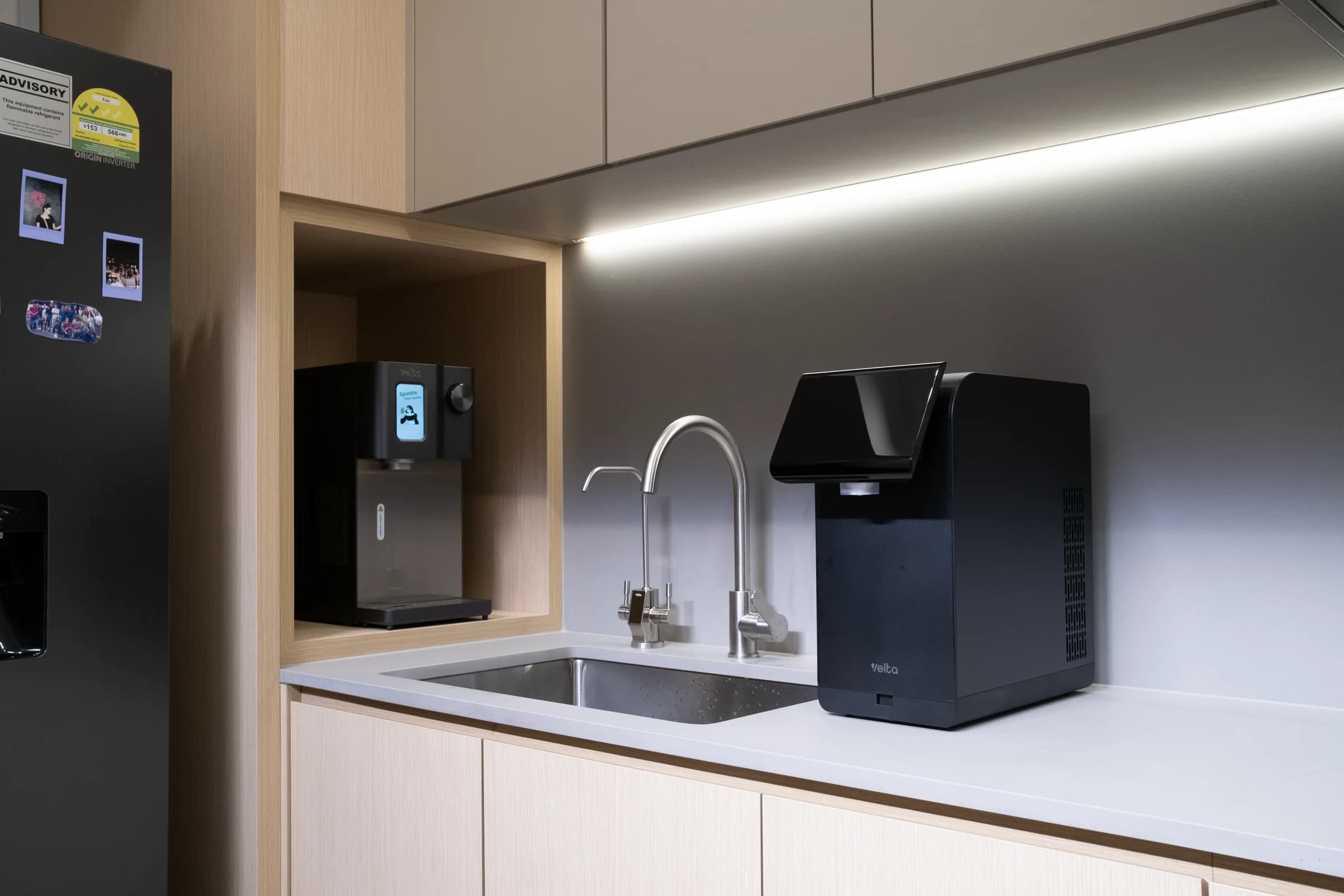
To make sparkling water at home, chill plain water and carbonate it in a compatible machine. The main formats are a countertop carbonator, a soda siphon with individual chargers, or a purifier with built-in carbonation.
The methods differ far more in price and effort than in the bubbles they make. Start with how often you will use it, what else the appliance needs to do, and how you will exchange CO2.
Method 1: Countertop Carbonator
This is the best starting point for most homes. You fill the manufacturer's bottle to its marked line with cold water, attach it, and use the button or lever to inject CO2.
The current SodaStream Singapore range includes the Terra, Art, and electric E-Terra. When checked on 14 July 2026, prices ran from $219.90 to $369.90. The Terra and Art are manual; the E-Terra uses powered fizz presets.
Drinkmate Singapore also sells the OmniFizz. Its removable infuser lets you carbonate drinks other than plain water. That flexibility also means the infuser and bottle need thorough cleaning after sugary drinks.
Basic steps
- Chill plain water. Cold water holds CO2 better.
- Fill only to the bottle's marked line.
- Attach the bottle exactly as the manual shows.
- Carbonate using the recommended number of presses or preset.
- Release pressure as directed before removing the bottle.
- Add flavour afterwards, unless the manual says the machine can carbonate other drinks.
Advantages
- Lowest practical upfront cost.
- Manual models need no power or plumbing.
- Easy to move between homes.
- Adjustable carbonation.
Trade-offs
- You make one bottle at a time.
- The machine and bottle take counter and storage space.
- It does not filter or change the water before carbonation.
- Bottles and cylinders only fit that machine and need replacing.
Method 2: Soda Siphon
A soda siphon is a pressure-rated bottle with a dispensing lever. You fill it with cold water and use a small CO2 charger, commonly 8g, according to the siphon's manual.
This format is compact and familiar in cocktail preparation, but each charger typically handles one batch. Before you commit, check the local price of chargers, whether food-grade ones are easy to find, and how you will dispose of the empties.
Never improvise with an unapproved cartridge or container. Inspect the siphon's seal and body, stay within the fill line, and release or open it only as the manufacturer directs.
Method 3: Combined Purifier and Carbonator
Velta HydroSpark+ combines a countertop RO purifier, hot-and-cold dispenser and carbonator. It dispenses ambient, hot, chilled, or sparkling water and can use either a removable 5L refill tank or a pipe-in connection.
It is not an under-sink system. The machine measures 220 × 508 × 436 mm and weighs 21.7 kg, so check your counter depth, the clearance above, ventilation and where the nearest power point is before deciding where it goes.
HydroSpark+ costs S$2,688. That is far more than a standalone carbonator, and you will keep paying for filter cartridges, CO2 and electricity. It is only worth comparing if you also want purified, hot and chilled water.
Advantages
- Ambient, hot, chilled and sparkling water from one appliance.
- RO filtration before dispensing.
- Tank mode or pipe-in water supply.
- No bottle to fill and attach for each glass.
Trade-offs
- Much higher purchase price.
- Large, powered countertop appliance.
- Filter and CO2 replacements add recurring cost.
- More maintenance than a manual carbonator.
Which CO2 Cylinder Do You Need?
CO2 connectors are not universal. Current SodaStream Terra, Art, and E-Terra models use the pink Quick Connect cylinder. Many older or third-party carbonators use a standard screw-in format. HydroSpark+ uses its own CO2 cylinder, supplied through Velta.
Before purchasing, confirm:
- The exact connector used by the model.
- Whether a cylinder is included.
- Exchange price and locations in Singapore.
- Whether there is a delivery fee, a deposit, or rules about returning empties.
- The stated maximum yield and how carbonation strength affects it.
SodaStream's Singapore CO2 page listed a $29.50 exchange price and up to 60 litres when checked. The litre figure is a maximum rather than a guaranteed yield.
What Does Homemade Sparkling Water Cost?
Start from how much your household actually drinks, not from a generic “cost per litre” claim. The basic calculation is:
CO2 cost per litre = exchange price ÷ actual litres from your cylinder
At SodaStream's $29.50 exchange price and stated maximum 60L yield, the best-case CO2 cost is about $0.49 per litre. Stronger fizz lowers yield. Then add any flavour, filter, electricity, bottle replacement, delivery, and the upfront machine cost spread over the years you expect to keep it.
For HydroSpark+, add filters at their current price and interval to CO2 and electricity. A per-litre number that assumes a usage you do not know is not worth much.
Can You Carbonate Singapore Tap Water?
Yes. PUB says Singapore tap water is suitable for drinking directly without further filtration. Chill it before carbonating. If you prefer filtered water for taste, filter it first or use a machine that filters before carbonation.
You do not need a purifier to make Singapore tap water safe. If your water is persistently discoloured or smells odd, report it and find out why, rather than assuming bubbles or a filter will fix it.
Safety Rules
- Use only bottles, cylinders, chargers, and seals approved for the exact machine.
- Do not carbonate in an ordinary sealed bottle.
- Do not exceed fill lines or pressure instructions.
- Replace carbonating bottles by their printed expiry date or sooner if damaged.
- Keep cylinders upright, away from heat, and handle them as the supplier instructs.
- Only carbonate what the machine allows. SodaStream says plain water only; Drinkmate can do other drinks with its infuser.
- Do not use dry ice in a sealed household container. Expanding CO2 can create dangerous pressure.
Frequently Asked Questions
Is a sparkling-water maker worth it? It can be if you will use it regularly and have a convenient cylinder exchange. Compare what you actually spend on bottled water with the machine, CO2 and bottles, rather than trusting a one-size payback figure.
How do I get stronger carbonation? Start with very cold water, stay within the fill line, and follow the machine's stronger-fizz instructions. More CO2 reduces cylinder yield.
Can I carbonate juice or cocktails? Only if the product explicitly supports it. Drinkmate's infuser handles other drinks. SodaStream's own advice is to carbonate plain water and add flavour afterwards.
How long will the water stay fizzy? It depends on temperature, carbonation level, container seal, headspace, and how often it is opened. Keep it cold and tightly sealed.
What is best for a small HDB kitchen? Measure the spot you have in mind. A manual carbonator has a smaller footprint and needs no plumbing. A combined purifier and carbonator replaces separate appliances but is deeper and heavier and may need water and drainage connections.
For model-by-model prices and trade-offs, see our six sparkling-water makers compared and our SodaStream vs HydroSpark+ guide.
Next step
Compare the products for your home.
Velta Singapore sells some of the products discussed in this article. Compare what they do, how they install and what they cost to run against the other products in the guide.
Velta prices are live from our Singapore store. Competitor prices, promotions and availability can change. Filters and any installation work add to the total cost over time.